

Blue Stockholm and Pavlov Dogs
- Artist
- Heidi Ulman
- Curator
- Siim Pütsepp
- Graphic design
- Kadri Karja
- In collaboration with
- PORTO
Curatorial text
A prisoner does not like bars. Or is that always the case?
At Patarei, a building that once held people in actual captivity, the question may at first seem inappropriate. Heidi Ulman’s exhibition begins where the bars are no longer made of iron. The artist is interested in the prisons built by the instinct to survive, the need to belong, learned responses, and the expectations of family and society. Restrictive structures can become part of a person’s sense of security, love, and, above all, their sense of self.
Blue Stockholm describes a state of mind rather than a city or a diagnosis. It is a cold kind of safety, a captivity that has become familiar, where leaving may appear more dangerous than staying. Blue is an inner climate, joined by an image from the artist’s childhood: a chequered sun, light reaching a person through prison bars. The light exists, but its shape is determined by the pattern through which it is seen.
Pavlov Dogs refers to instincts and conditioned responses. A signal sounds and the body reacts before the mind has time to choose. From an early age, we learn which behaviour brings approval, which role secures belonging, and what is considered a good life. Education, work, relationships, abundance, and security can sustain a person, yet they can also become invisible bars. In Heidi Ulman’s world, the signals may take the form of family approval, success, shame, love, fear of rejection, or the desire to be considered a worthy member of one’s tribe.
Social conditioning rests upon something very ancient: the need to survive. Exclusion from the tribe once meant a direct threat to life. This is why a person may defend even a structure that restricts them, because it promises belonging and familiarity. A marionette does not see the strings that move it. Likewise, a person may fail to notice when their choices have begun to repeat movements prescribed by family, culture, or fear.
Ulman’s large-scale oil paintings give these inner mechanisms a physical form. Surreal figures freeze, hide behind hair and protective layers, become trapped behind glass, or reach towards another person through a fragile connection. They are points of perception that the artist, as a Shadow Witness, brings into view from behind the familiar scenery of everyday life.
The paintings extend beyond the walls into installations dispersed throughout the space, the ticking of metronomes, darkness, and the visitor’s own movement. The exhibition space participates in the creation of meaning: it directs attention, interrupts habitual ways of looking, and allows us to sense how an environment can guide both body and thought.
During the hours of darkness, visitors move through the exhibition by flashlight, choosing for themselves what to bring out of the darkness and what to leave in shadow. Blue Stockholm and Pavlov Dogs is more than a conventional painting exhibition. It offers a journey through a mental landscape, or a kind of psychological theme park whose attractions are the viewer’s own expectations, fears, memories, and moments of recognition. Every sound, object, shadow, or patch of light may become a signal to which we react before we are able to put its meaning into words.
Patarei Sea Fortress, a former prison, makes these images all the more acute. The exhibition does not equate historical and physical imprisonment with everyday social pressure or the internal constraints of the individual. Instead, it places them uncomfortably close to one another.
At the heart of the exhibition lies metamorphosis: the dissolution of a former self and the painful birth of a new understanding. Heidi Ulman’s works move from paralysis and concealment towards seeing and forming connections.
Light does not remove the bars. It makes them visible. Patarei stands as a witness to this journey, in which freedom begins with seeing.
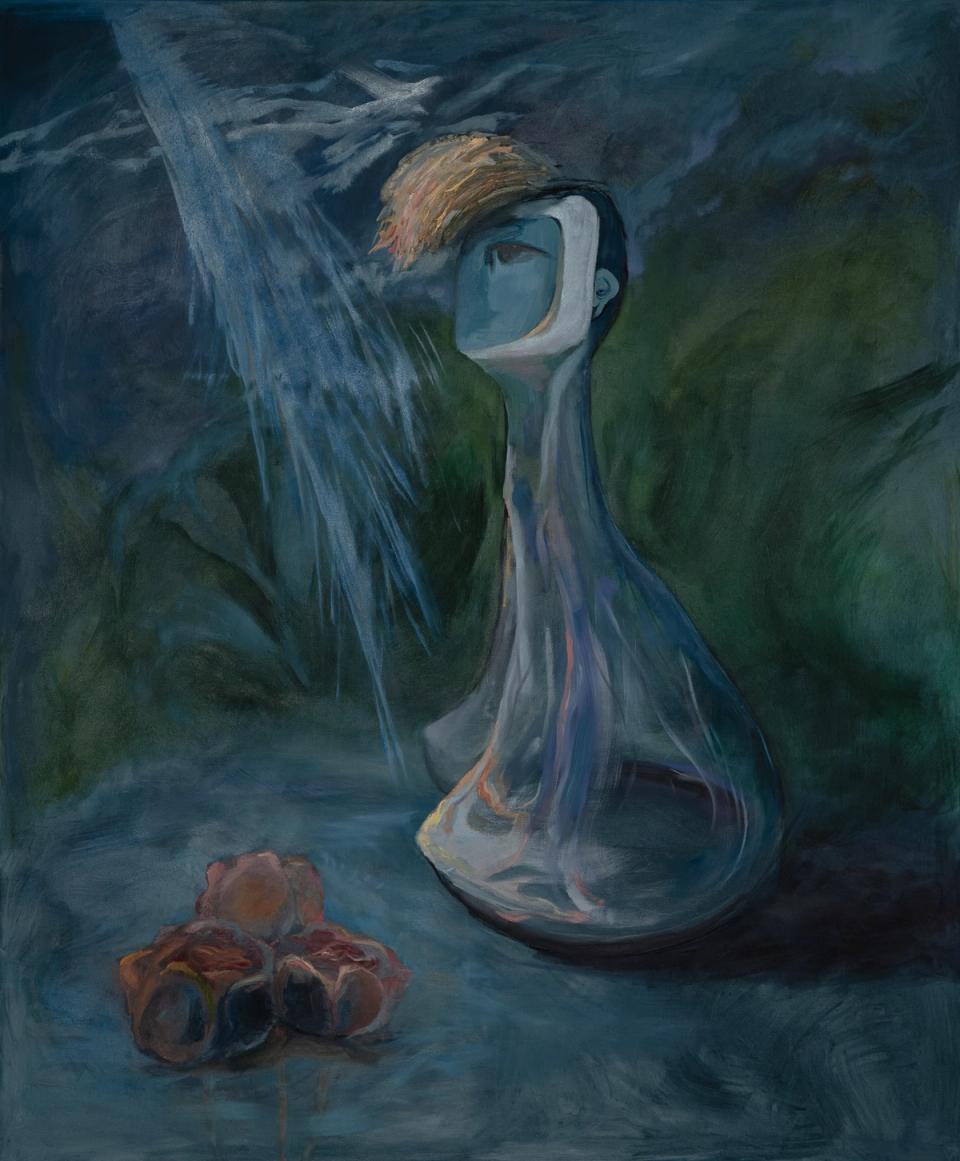
Frozen
The figure is as if sealed inside glass. Rain has stopped, flowers have turned to concrete, and an invisible boundary has formed between the light and the person. Yet a bottle is only glass. An escape route exists, even if it is not yet visible. The frozen ground beneath the figure’s feet may become a surface in which to grow one’s own roots.

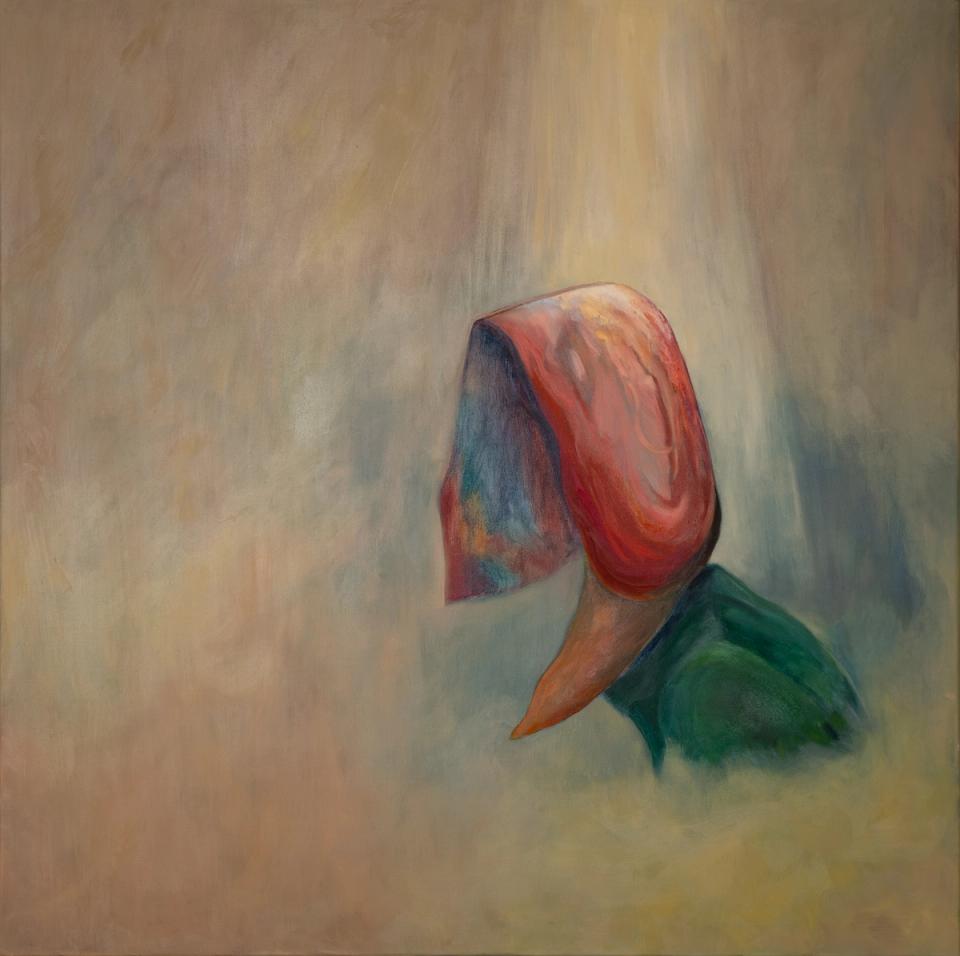
Hiding
Hiding does not mean only taking cover. A person can disappear behind images, roles, or even carefully constructed uniqueness. Beneath the protective layer remain fragility, wildness and a longing for freedom. Solitude is at once harsh and luminous: by moving away from familiar stories, a person may finally notice the light that was always behind them.

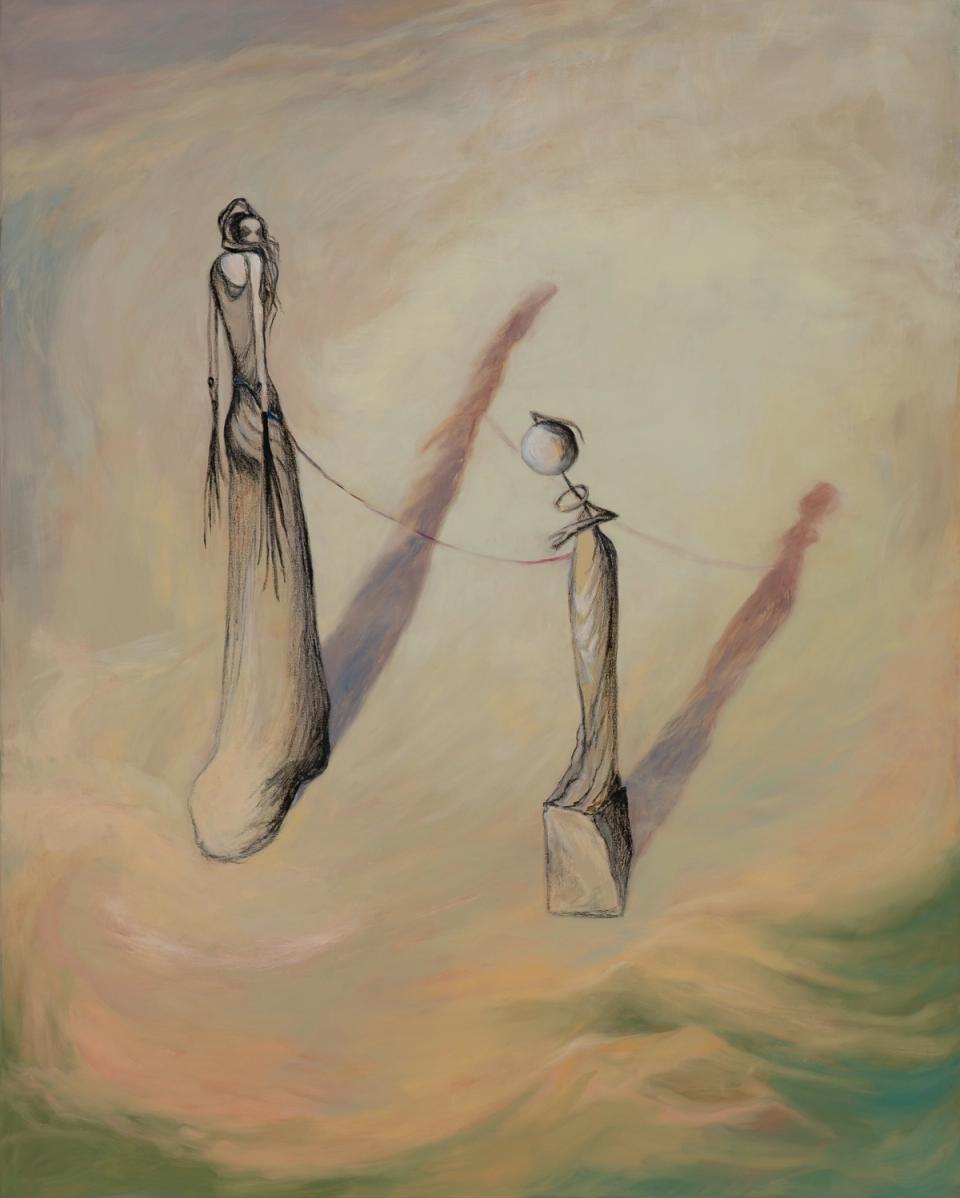
Bond
When everything extraneous has been removed, two figures remain, and the fragile line that joins them. On the painting, the artist’s soul meets that of her great-grandmother — wildness and ancient wisdom, movement and peace. This bond is older than the roles, judgments and generational patterns around it. It can no longer be separated from the artist.

Open Thu–Sun 14.00–20.00